back to blogs
For most of architectural history, drawings were the only tool available for communicating design intent before construction. Elevations, sections, plans and perspectives — produced with precision and considerable skill — defined the standard for project documentation and client communication. Today, photorealistic 3D rendering has joined and, in many contexts, displaced those traditional tools. Understanding when each approach is appropriate is one of the most commercially relevant decisions an architect or developer can make.
What Traditional Architectural Drawings Do Well
Traditional drawings — floor plans, sections, elevations, construction details — are the precise technical language of architecture. They communicate information that rendered images cannot: dimensions, structural relationships, material specifications, the exact spatial logic of a building.
For technical audiences — engineers, contractors, planning authorities — drawings remain the primary medium of communication. They are legally and contractually significant documents. They define what gets built. No photorealistic render, however impressive, replaces the role of a dimensioned floor plan or a detailed section in the construction process.
Traditional hand-drawn or CAD perspectives also carry their own visual authority in certain contexts. A carefully composed ink drawing communicates the character of a design with an economy of means that a fully rendered image sometimes lacks. For certain typologies — civic buildings, cultural institutions, competitions requiring a specific aesthetic register — the restraint of a drawing can be more appropriate than the literalism of a render.
What Photorealistic 3D Rendering Does Better
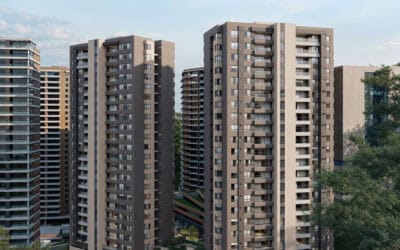
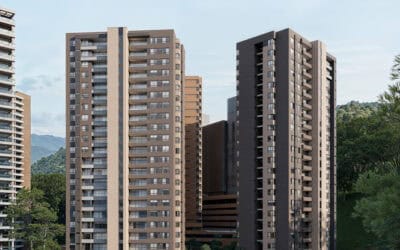
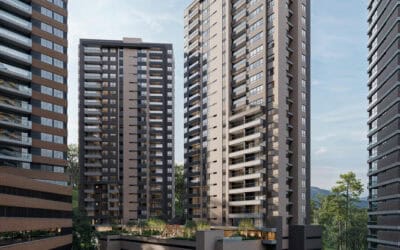
The fundamental advantage of photorealistic rendering is immediate accessibility. A floor plan requires significant interpretive effort from a non-technical audience. A photorealistic image requires none — it communicates material quality, spatial atmosphere, lighting conditions and the overall character of a space with a directness that drawings cannot match.
This accessibility has direct commercial consequences. In real estate pre-sales, the ability of a buyer to understand and emotionally engage with an unbuilt project is the single most important factor in purchasing decisions. Renders, virtual tours and animations make that understanding possible months or years before construction completes — and the commercial value of that capability is substantial and measurable.
Rendering also enables communication that drawings cannot achieve in any form: the quality of afternoon light in a west-facing living room, the visual relationship between a rooftop terrace and the city skyline, the way a material changes character between day and evening illumination. These experiential qualities are what buyers are actually purchasing — and rendering is the only tool that can communicate them accurately in advance of construction.
The Real Question: Who Is the Audience?
The choice between drawings and renders is ultimately determined by audience and purpose. A simple diagnostic question resolves most cases: is the person receiving this communication technically trained to read architectural drawings, or are they not?
For technically trained audiences — engineers, planning authorities, construction managers — drawings are the correct medium. For non-technical audiences — clients, buyers, investors, community stakeholders — renders are almost always more effective. For mixed audiences — a planning submission that needs to communicate with both a planning committee and local residents — a combination of both is typically required.
Cost and Time Considerations
The cost and time investment required for high-quality photorealistic rendering has decreased substantially over the past decade, while quality has increased significantly. For most project types and scales, the commercial return on a well-executed rendering programme — measured in pre-sale conversion rates, client confidence, reduced revision cycles and competitive differentiation in tender submissions — substantially exceeds the production cost.
The threshold question is not “can we afford renders?” but “what is the commercial cost of not having them?” For a residential development with fifty apartments to sell off-plan, the difference in sales performance between a campaign supported by photorealistic renders and virtual tours, and one relying on floor plans alone, represents a return on investment that makes the production cost straightforward to justify.
Combining Both Approaches
In practice, the most effective architectural communication programmes use both drawings and renders — each for the purposes it serves best. Technical documentation is produced in drawing form. Client-facing and marketing communication uses renders, virtual tours and animations. The two streams serve different audiences and different functions, and the presence of one does not diminish the value of the other.
For complex projects, the render production process itself can contribute to design development — the act of building a detailed 3D model reveals spatial and material issues that are difficult to identify from drawings alone. The rendering process and the design process become integrated, with each informing the other throughout the project timeline.
Work With Surreal Studio
Surreal Studio produces architectural visualization and 3D rendering services for developers, architects and real estate teams across Colombia and the United States. Our work spans residential, commercial and hospitality projects — from individual apartment renders to complete virtual tour and animation programmes for major developments.
To discuss the right visual communication approach for your project, contact our team directly. We respond to all enquiries within one business day.